Overview
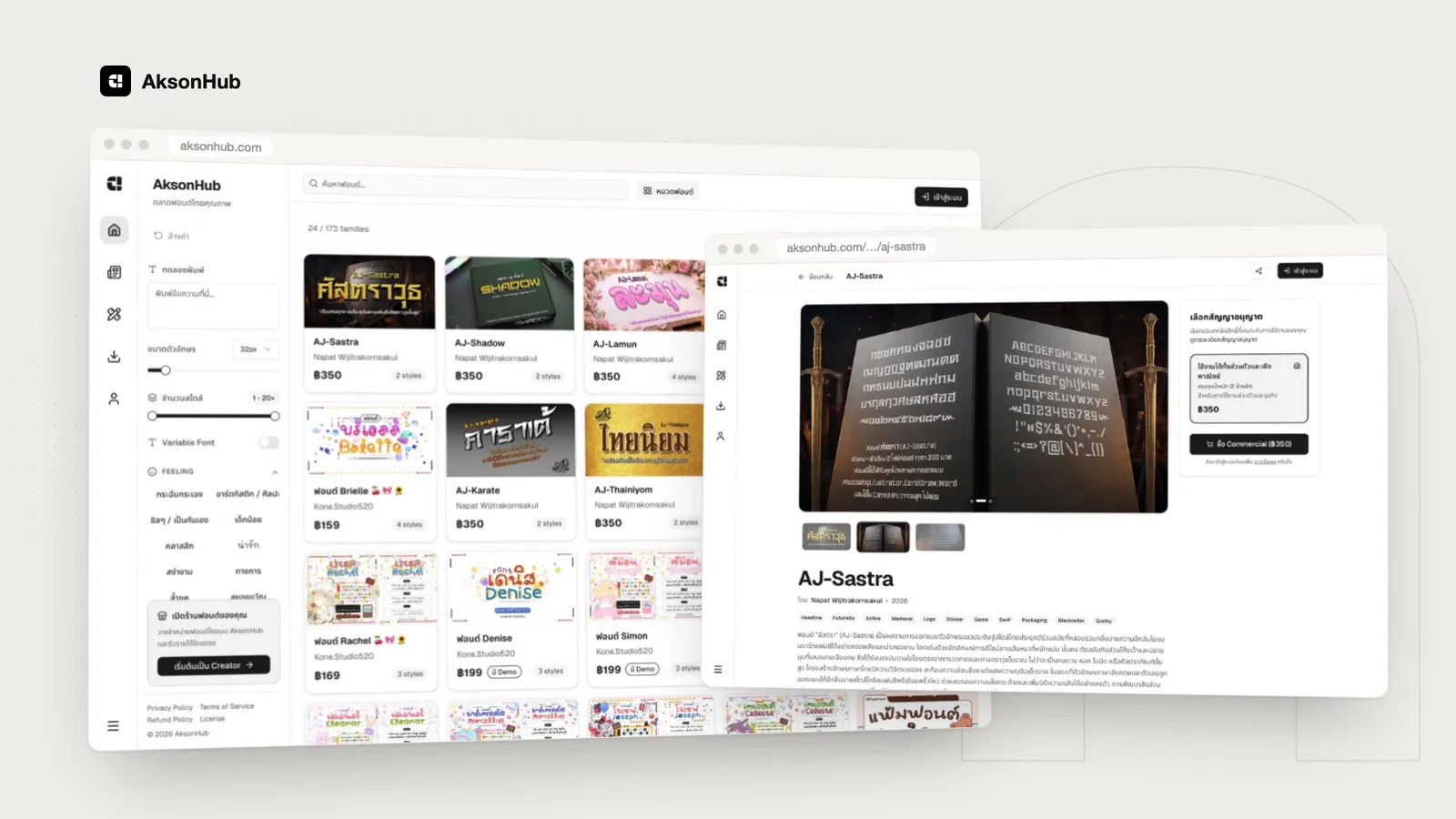
AksonHub is a Thai-first font marketplace that connects Thai type foundries and independent type designers with people who need properly licensed fonts.
I started it in March 2026 as a solo side project and own every part of it: product strategy, UX/UI, front-end and back-end engineering, payments, legal pages, content and SEO. It is live at aksonhub.com.
The problem
- Thai fonts are scattered across social media pages, personal websites and file-sharing links. Finding a font is hard, and knowing whether you are allowed to use it commercially is even harder.
- Independent Thai type designers have no dedicated storefront that handles licensing, checkout and payouts for them.
- Buyers need to see how a font looks with their own Thai text before paying, not just a pre-made promo image.
My role
Founder, product designer and full-stack developer: a team of one. Every screen, flow and line of code in this case study is mine, shipped over 430+ commits in about seven months.
01 - Discovery for buyers
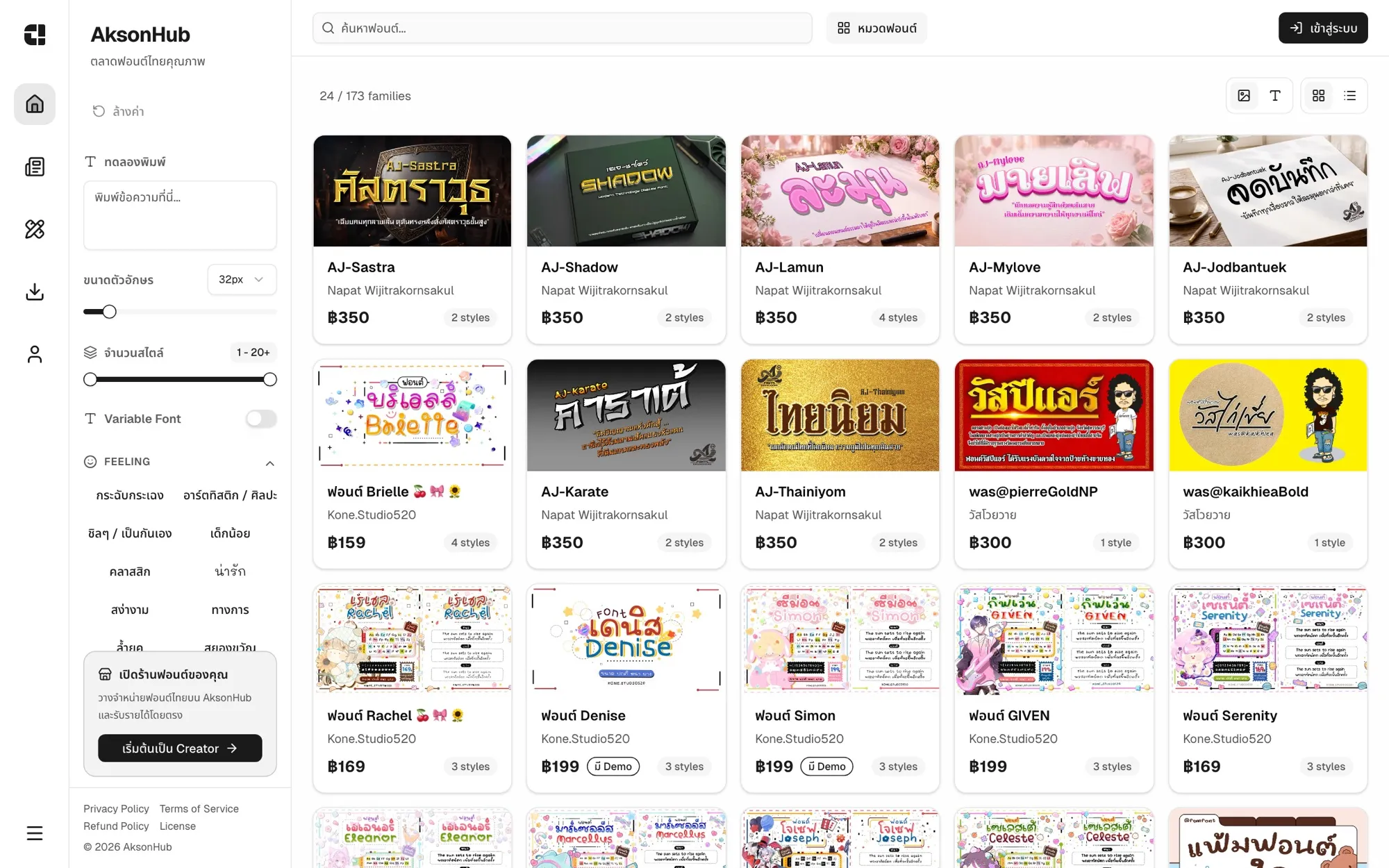
The homepage is the catalogue. Buyers can type their own text and see it rendered in every font, adjust the size, filter by style count or variable fonts, and browse by feeling, style and use case. That is how designers actually think when they look for a font.
02 - Licensing that is easy to understand
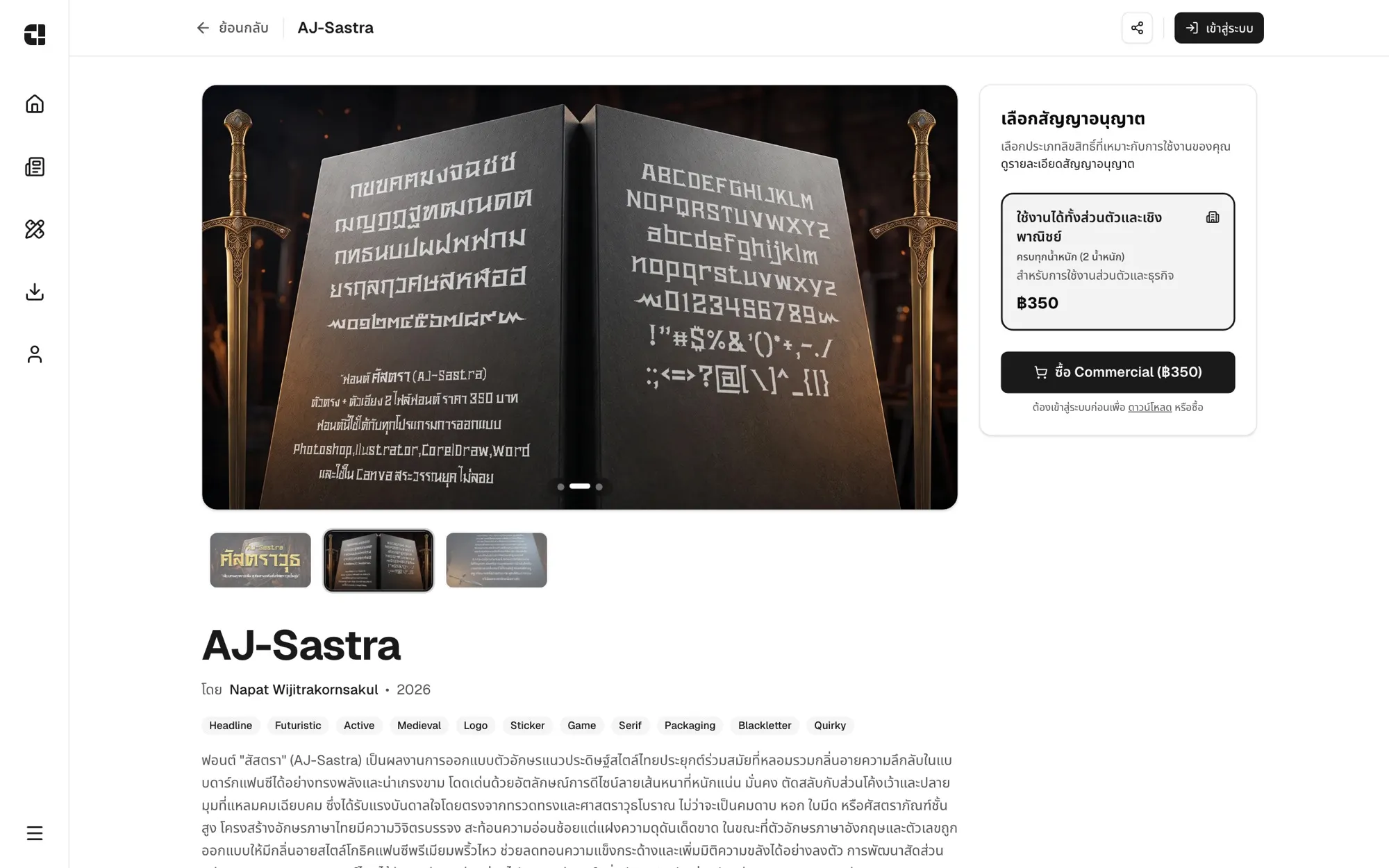
On a font page, the license choice sits right next to the gallery with a plain-language description and one clear price, so buyers know what they are paying for before they check out.
03 - Tools for creators
Creators get their own studio: they upload font families with cover images and prices, manage licenses, see 30-day shop stats, and get paid through Stripe. Two tools exist specifically to protect their work:
- Leak tracing to check which purchase a suspected leaked font file came from.
- Web usage to see websites that declare a font name matching one they sell.
04 - Stela, a directory of Thai type
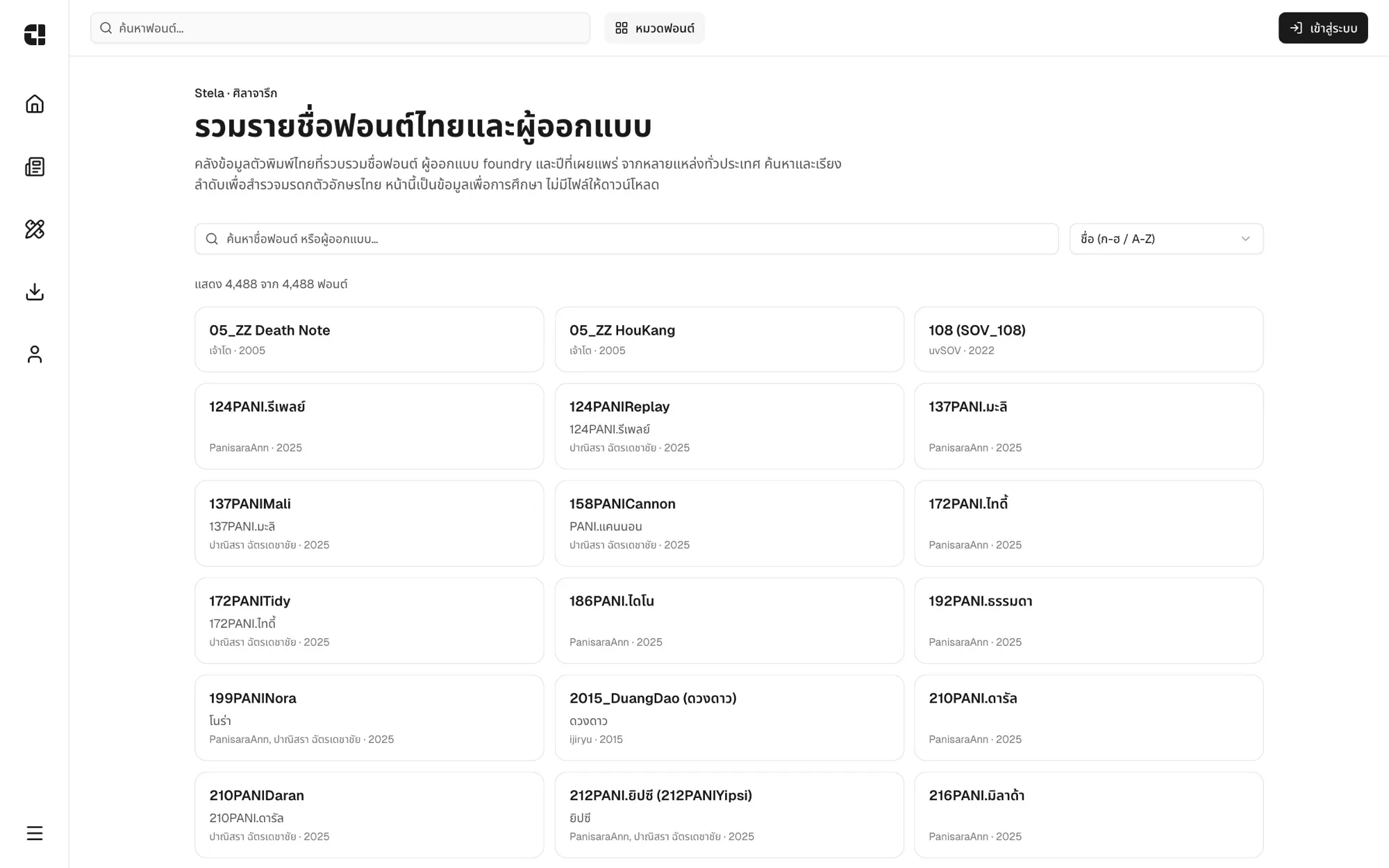
Stela is an informational directory of Thai fonts. The name refers to the stone inscription where Thai script began. It documents font names, designers, foundries and release years from sources across the country, and links back to the marketplace when a font or designer is available on AksonHub.
05 - Search as a product surface
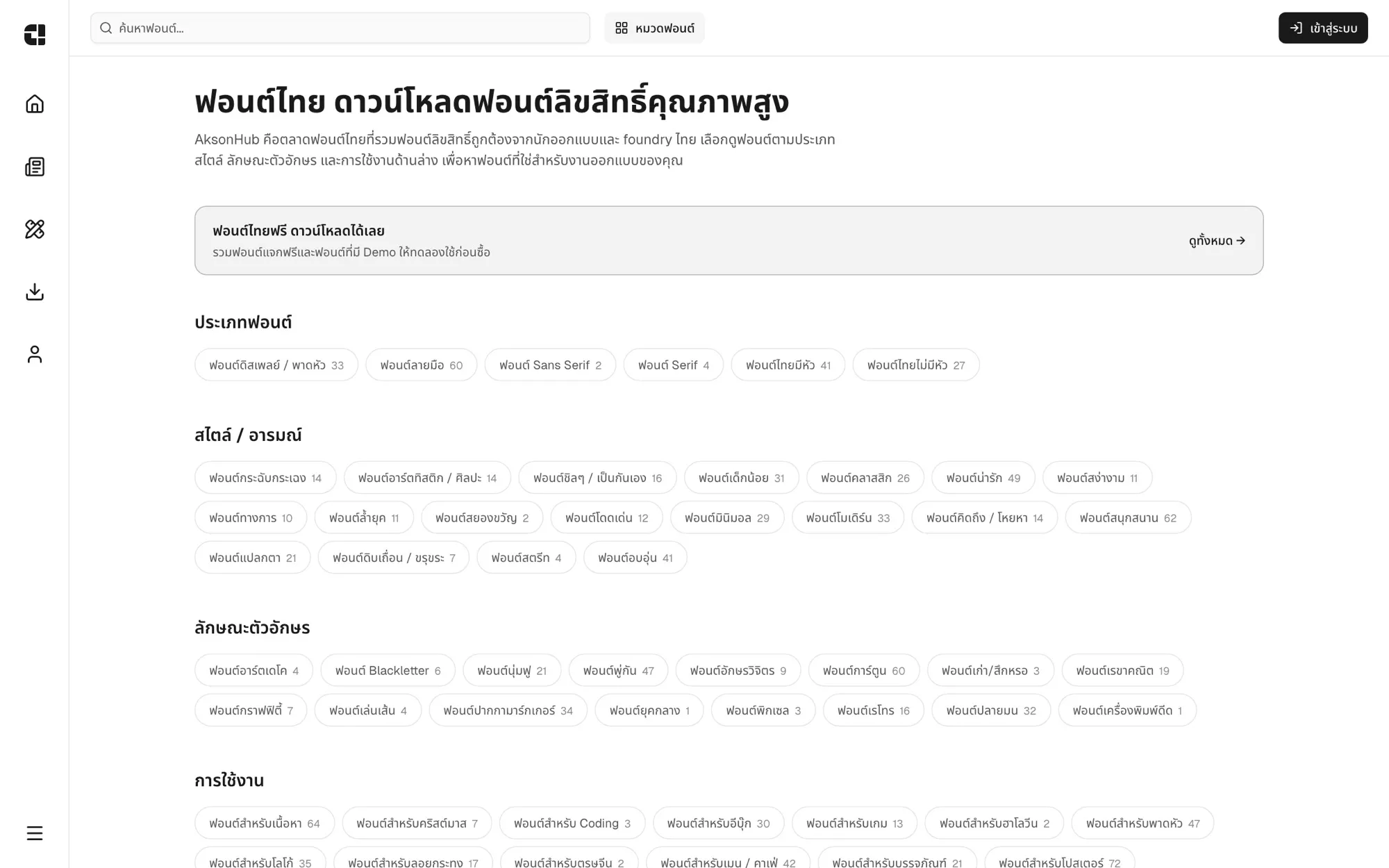
Because most people find fonts through Google, I treated SEO as part of the product design: hub and category pages built around how people search in Thai (“Thai handwriting fonts”, “fonts for logos”, “free Thai fonts”), with structured data, breadcrumbs and internal linking.
Running a solo product like a team
- Documentation: every feature has a PRD, every production bug gets an incident write-up, and a knowledge base captures the gotchas, so future me (and AI coding agents) never re-learn the same lesson.
- Quality: Playwright end-to-end smoke tests run in CI, and Sentry reports errors in production.
- Stack: Next.js, Supabase, Stripe, Tailwind CSS and shadcn/ui, deployed on Vercel.
The result
- 173 font families live on the marketplace.
- 4,488 Thai fonts documented in Stela.
- 30,038 Google impressions and 1,256 clicks between 1 June and 9 July 2026, with a 4.18% CTR and an average position of 6.89 (Google Search Console).
What I learned
Building AksonHub end to end changed how I work as a designer. Designing in code means every decision meets real constraints immediately: data, performance and edge cases. Designing for search, payments and operations turned out to be as much a UX problem as the screens themselves.